
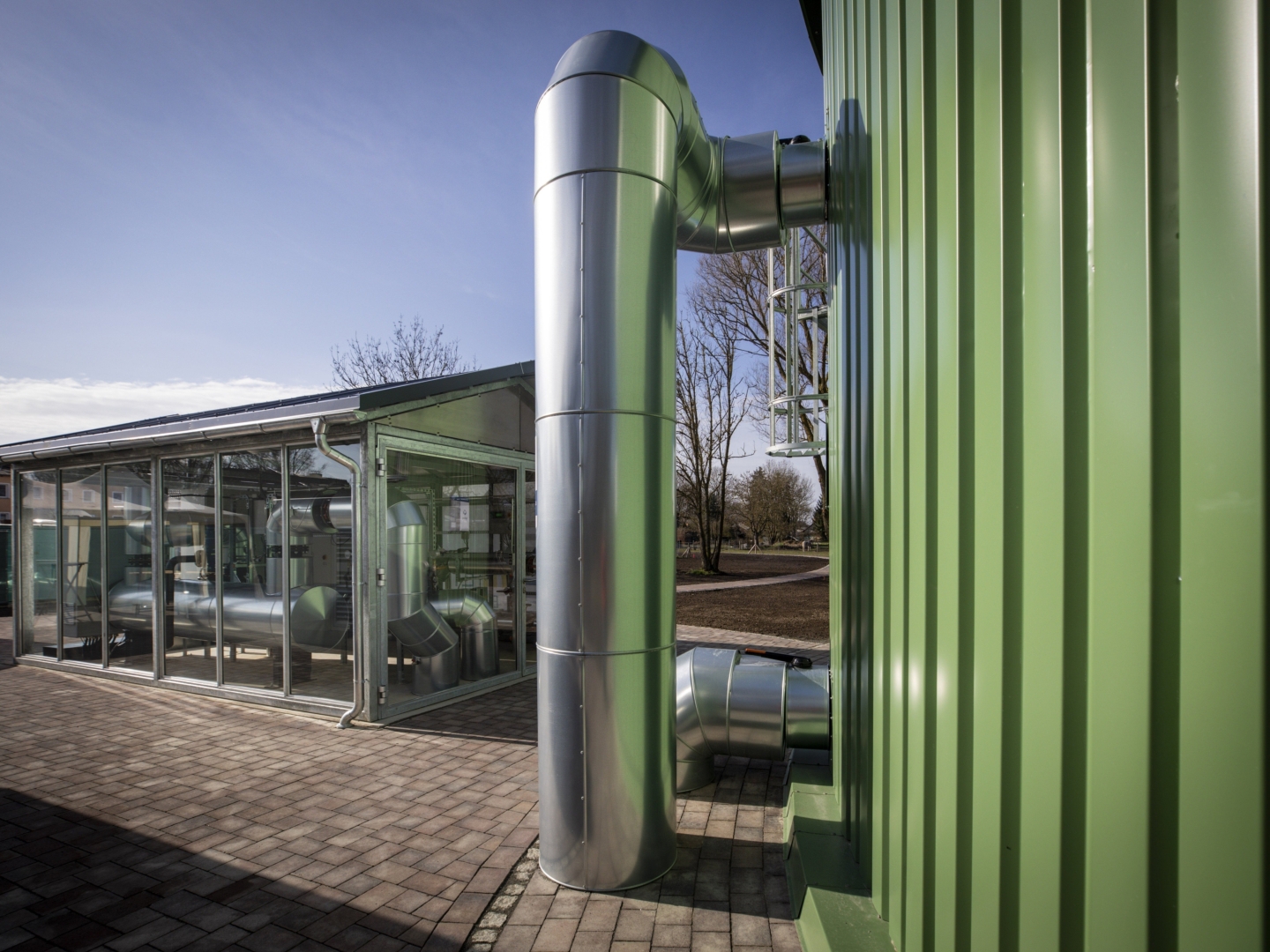
Wind-to-heat storage
Wind-to-heat storage systems use surplus renewable energy to generate and store heat. To do this, electrical current is converted into heat via a heating element and stored in large hot-water tanks.
This principle – also known as ‘power-to-heat’ – makes it possible to use electricity from wind and solar energy when it is not currently needed in the grid. The energy is not lost, but is stored in the form of heat and used later.
In the ENERTRAG Verbundkraftwerk®, wind-heat storage systems help to utilise energy from renewable sources even more efficiently. Surplus electricity from wind energy can be converted directly into heat and made available to local heating networks.
This balances out fluctuations in electricity generation and ensures that renewable energy is utilised in full, rather than having to curtail plant output. At the same time, it creates a climate-friendly local heat supply.
In this way, the Verbundkraftwerk links the electricity and heating sectors into a single energy system – efficient, regional and renewable.
Example at the Verbundkraftwerk
Nechlin Wind-Heat Storage Facility
How it works
Surplus electrical energy is converted into heat via a heating element and stored in a hot-water tank. This heat can later be used for local supply.
Benefits in the Verbundkraftwerk
- Storage of surplus wind energy
- Provision of clean heat for local networks
- Integration of the electricity and heating sectors (power-to-heat)
A distinctive feature of ENERTRAG
The storage system utilises surplus wind power from the ENERTRAG Verbundkraftwerk®. As a result, wind turbines need to be curtailed less frequently and the energy generated can be utilised in full.
Technical data
| Rated output: 2,000 kW |
| Annual output: 780 MWh |
| Commissioning: 2020 |
| Households supplied: 35 |

"Wytwarzamy energię odnawialną w sposób zrównoważony, aby Ziemia pozostała miejscem dobrym do życia. To jest nasza misja. Na tej drodze chcemy całkowicie zastąpić paliwa kopalne do 2040 roku".
Jörg Müller
Założyciel i Przewodniczący Rady Nadzorczej ENERTRAG SE